How to Build a Business That Doesn’t Cost You Yourself
Jan 22, 2026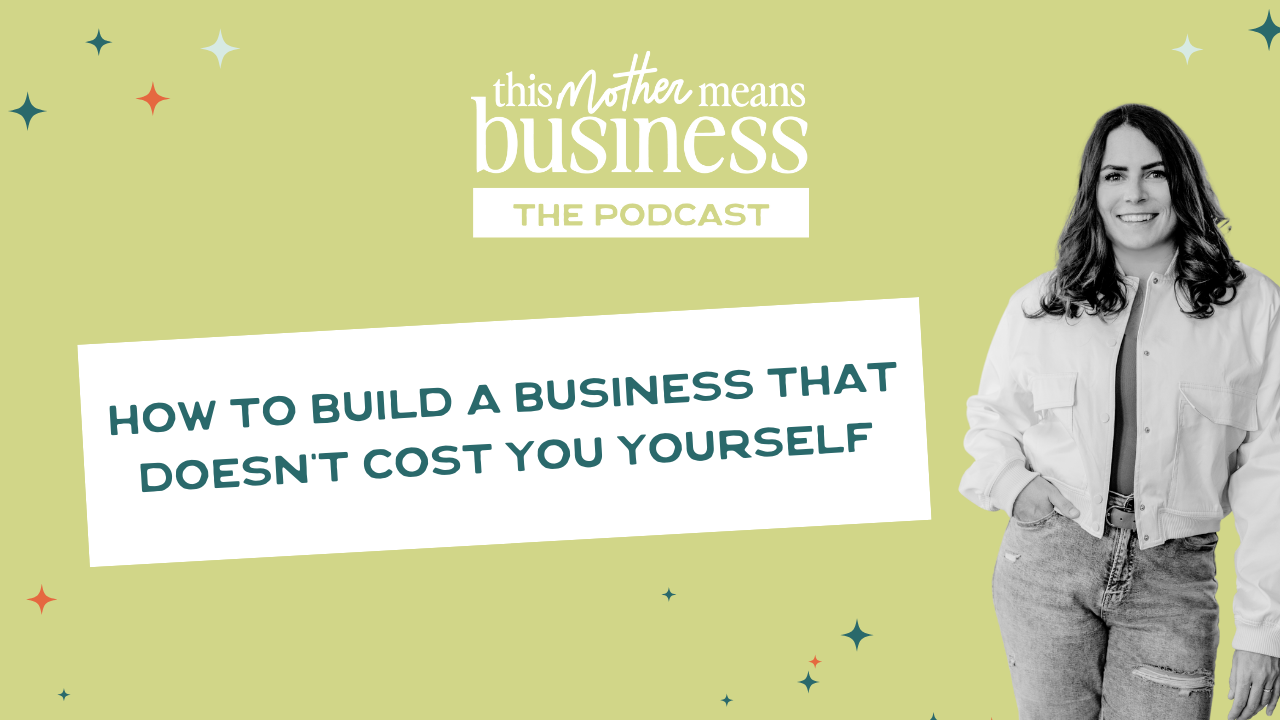
Why Identity and Sustainability Matter More Than the Perfect Business Plan
In this episode of This Mother Means Business, I sat down with entrepreneur and business coach Jana Boyko, creator of the Bedside Business Plan, to talk about something that doesn’t get nearly enough attention in the online business space: the sustainability of the human behind the business.
So many conversations about entrepreneurship focus on strategy, scale, and systems — but far fewer centre the identity, mental health, and lived experience of the person building the thing. Jana’s work challenges that narrative in a powerful way. This conversation was a reminder that how we build matters just as much as what we build.
Why Traditional Business Plans Don’t Work for Most Entrepreneurs
For many entrepreneurs — especially women — the idea of a traditional business plan feels intimidating, rigid, and frankly unnecessary. Unless you’re seeking funding, most people aren’t told they need one, and when they try, the language feels heavy and disconnected from real life.
Jana shared that this exact disconnect is what inspired her to create the Bedside Business Plan. Instead of business jargon and rigid templates, she wanted to offer a human, reflective approach — one that asks expansive questions and helps people understand the landscape of entrepreneurship without feeling overwhelmed.
For early-stage entrepreneurs especially, it’s not just about having answers — it’s about knowing what questions to ask in the first place.
Why the Entrepreneur Belongs in the Business Plan
One of the most powerful parts of Jana’s work is that the first sections of the Bedside Business Plan aren’t about revenue, marketing, or operations — they’re about you.
Your vision.
Your needs.
Your capacity.
What success actually looks like in the context of your life.
Too often, sustainability is discussed only in terms of the environment or company growth. Rarely do we talk about the sustainability of the entrepreneur at the centre of it all. Jana has seen — both personally and professionally — what happens when people build successful businesses that quietly erode their mental health.
If the person at the centre burns out, the business doesn’t win.
The Mental Health Cost of Entrepreneurship
Jana shared a story that deeply stayed with me — hearing a wildly successful founder admit that while her business was thriving, her mental health was at its worst. That moment cemented something Jana has long believed: entrepreneurship shouldn’t be life-destroying in order to be meaningful or impactful.
Entrepreneurship does come with pressure. It stretches us. It challenges us. But there is a difference between growth and depletion.
One of the most powerful reframes we discussed was this: you pay a mental health “price” every day in entrepreneurship — the question is how much you’re willing to pay. The decisions you make, the boundaries you set, and the pace you choose all determine whether that cost stays manageable or becomes overwhelming.
Your Business Is a Relationship — Not a Machine
One of my favourite moments in the conversation was Jana’s reframe that your business isn’t just something you do — it’s something you’re in relationship with.
Just like in romantic relationships, many entrepreneurs operate from one of two fears:
- Fear of losing the business, which leads to gripping, control, and burnout
- Fear of losing themselves, which leads to playing small and holding back
Neither leads to a healthy dynamic.
A sustainable business relationship is reciprocal. It can have challenging seasons, but it shouldn’t leave you burned to the ground.
As I often say: your business exists to serve you — not the other way around.
Compromise vs. Being Compromised
Jana shared a distinction I’ll be thinking about for a long time: the difference between compromise and being compromised.
Compromise can be empowering.
Being compromised slowly erodes your boundaries, self-trust, and wellbeing.
This line shows up everywhere — in client work, partnerships, pricing, and how much we tolerate in the name of “being professional.” Learning where that line is for you is a critical part of growing into the entrepreneur your business requires.
Becoming the Entrepreneur, Not Just Building the Business
Jana’s newest journal, Employed Entrepreneur, focuses almost entirely on identity — not tactics. It’s designed for people transitioning from employee to entrepreneur, where confidence, boundaries, and self-trust matter just as much as any strategy.
This resonated deeply with my own journey. Entrepreneurship requires personal growth whether you’re ready for it or not. You don’t start with the skills to navigate unpaid invoices, misaligned partnerships, or visibility fears — you build them through experience.
The people who succeed aren’t necessarily the most talented. They’re the ones who keep going.
Why Authenticity Is a Business Strategy
Corporate environments often reward conformity. Entrepreneurship demands authenticity.
People don’t connect with polished perfection — they connect with humanity. The messy seasons. The learning curves. The growth. Being willing to show up as yourself — especially as a mother building a business — is what creates real trust.
Authenticity isn’t a branding tactic.
It’s a sustainability strategy.
Old-School Entrepreneurship Still Works
Jana also shared the behind-the-scenes story of getting her journals into Indigo stores across Canada — and it didn’t happen through a viral post or passive funnel. It happened through boots-on-the-ground entrepreneurship: walking into stores, talking to managers, following intuition, and taking the shot.
In an online-first world, it’s easy to forget that relationships, conversations, and community still matter. Often, they matter more.
Building Something That Actually Serves Your Life
This conversation was a powerful reminder that entrepreneurship isn’t about building the biggest thing possible — it’s about building something that fits.
Fits your life.
Fits your values.
Fits your capacity.
You don’t need to sacrifice yourself to be successful. In fact, the businesses that last are usually the ones built with the human at the centre.
And that’s the work worth doing.