Small Business Financing and Financial Strategy for Women Entrepreneurs — with CIBC Business Banking
Jun 18, 2026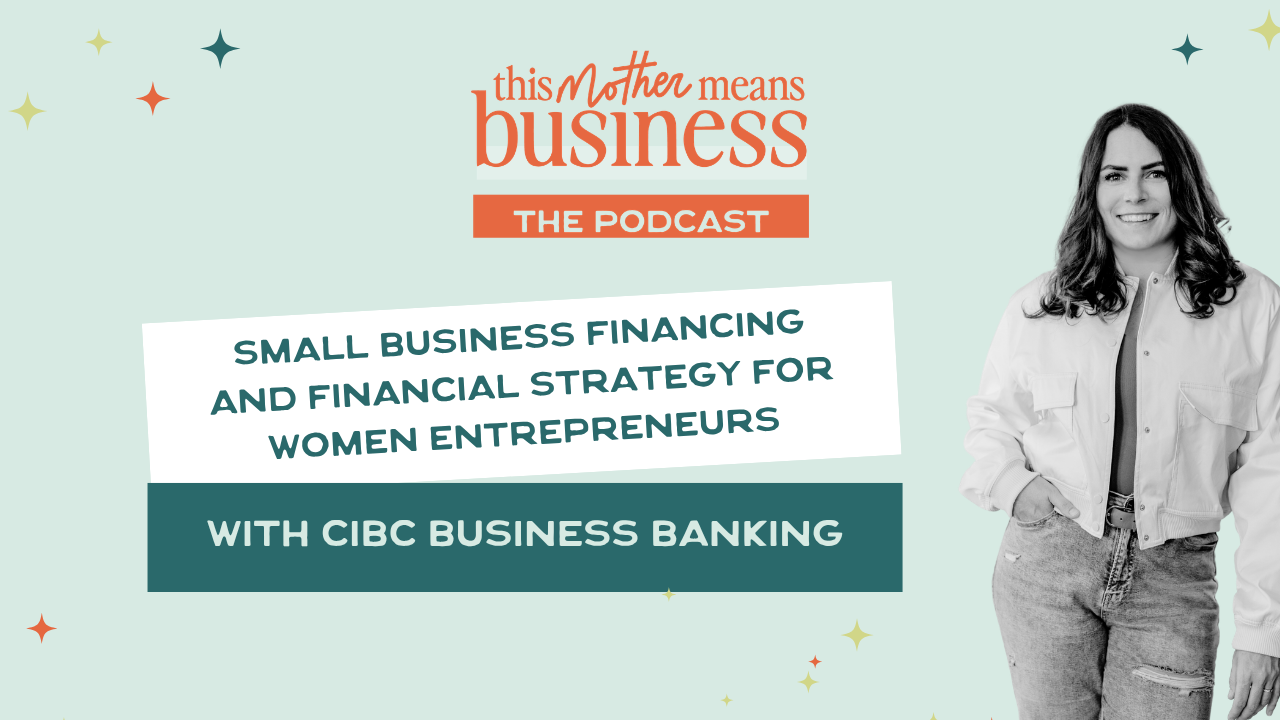
Why understanding your numbers is about more than taxes
Most business conversations feel exciting.
Marketing. Visibility. Scaling. A big launch that fills your inbox for a week. But there's one conversation a lot of entrepreneurs will do almost anything to avoid — and it's the one that actually determines whether your business survives long-term.
Money.
For many of us, the reality is no one ever sat us down and explained how this stuff actually works. How financing decisions get made. What banks are really evaluating when you walk through the door. How to read your own financial statements. What your business might be worth someday, and whether it's even sellable.
So, we end up convincing ourselves that everyone else somehow already knows, and we just missed the memo, so we don’t ask.
That's exactly why I wanted to have a recent conversation on the podcast with Veronica Diaz from CIBC Business Banking and Ana Rebro, CPA and Managing Partner at Farnham & Company. Because the financial side of your business isn't optional if you want to build something that actually lasts.
Why the financing process feels so overwhelming
One of the biggest themes that came up early in this conversation was how intimidating the whole financing process feels for small business owners — and how much of that comes from a single misunderstanding.
A lot of entrepreneurs walk into the bank believing that if the idea is good enough, the answer will be yes. But banks are evaluating far more than your idea. They're looking at your financial history, your ability to repay, your systems, your planning — and whether you actually understand your own business. Veronica walked us through what's known as the "3 Cs of Credit" — character, capacity, and collateral — and one of the most interesting parts of that conversation was hearing how much the entrepreneurs themselves get evaluated, not just the numbers on the page. Your preparation, your confidence, your honesty about where you're at. It all counts.
Your financial statements are telling a story — are you reading it?
Ana explained financial statements in a way I genuinely hadn't heard before. She said they tell the story of your business. Not just for the tax season. Not just to hand them off to your accountant once a year. But for you — so you can actually understand what's working, what isn't, whether your pricing makes sense, and where things are headed.
And here's the uncomfortable truth: most business owners find out whether they made money last year at their year-end meeting. That's a long time to wait. Because by the time you're sitting across from your accountant reviewing the numbers, you've already made every decision for that year without that information.
Understanding your finances throughout the year isn't a "nice to have." It's how you stop operating reactively and start making actual strategic decisions.
Treat it like a business from the beginning — even if it doesn't feel like one yet
This came up a few times throughout the episode and I think it's worth saying plainly: even if your business started as a side hustle, even if you're still working from your kitchen table, even if you haven't fully claimed the title of "entrepreneur" yet — if your intention is to generate profit, you're running a business.
Ana's point was that the earlier you start treating it that way — building systems, tracking expenses, separating your finances, understanding your numbers — the stronger your foundation becomes when growth actually happens. A little bit of organization now saves an enormous amount of stress later. That's not a platitude. It's just true.
On the personal finance stuff (yes, we talked about it)
Using personal savings to fund your business. Putting expenses on a personal credit card because the business one isn't set up yet. Borrowing money from a family member to bridge a gap. All of this feels messy and slightly embarrassing to admit out loud.
But it's incredibly common. Both Veronica and Ana were clear that the priority isn't perfection — it's documentation, organization, and clear tracking. Not because anyone is judging you, but because untangling a messy financial picture later is significantly harder than being a little more intentional now.
Why you should be thinking about business valuation before you think you need to
This was one of my favourite parts of the whole conversation.
Most entrepreneurs never stop to ask: what is my business actually worth? Could I sell this someday? Ana explained that one of the biggest drivers of business value is building a company that can operate without you at the centre of every single thing.
For women entrepreneurs, I think this lands differently. So many of us have been quietly rewarded for doing everything ourselves — the hustle, the availability, the "I'll handle it."
But a business that only functions because you're running on fumes is not a valuable business. It's a job you created for yourself.
Building systems, delegating, stepping out of survival mode — that's not laziness. That's what makes a business worth something.
The part of the episode nobody planned for
At the end of this conversation, we ended up talking about something none of us had on the agenda: the emotional reality of being an entrepreneur.
The loneliness of it. The pressure. The way success can still feel fragile even when things are genuinely going well. And I think that conversation mattered because the financial health of your business is deeply connected to everything else — your capacity, your clarity, your ability to make good decisions when it's hard.
We don't just want profitable businesses. We want freedom. Presence. Lives that actually feel good to live. And that requires building something that supports you — not something that slowly hollows you out.
One last thing
If you've spent years feeling behind on the financial side of your business, I want you to hear this clearly: you are not behind. You weren't taught this, and that's not a character flaw. These are learnable skills. And every time you get a little clearer on your numbers, a little more comfortable with the language of finance, you become harder to take advantage of and easier to take seriously — by banks, by partners, and by yourself.
Building a sustainable business isn't just about making money. It's about understanding how money works well enough to build something that holds.
Contact the CIBC Business Client Advice Centre: 1-866-992-7223
CIBC Women Entrepreneurs Hub: https://www.cibc.com/en/business/programs/women-entrepreneurs.html